Travel comfort guide
What to Look for in a Travel Pillow for Long Journeys
A travel pillow is a small piece of equipment with an outsized effect on a long trip. Shape, support, filling, cover, and packability all influence whether it helps you rest—or becomes one more awkward item to carry.
Published November 23, 2026
Long journeys unfold in fragments: the hush of an overnight cabin, a train window turning from darkness to dawn, the steady vibration of a car on a highway. In these settings, sleep is rarely as simple as lying down. Seats recline only so far, luggage space is limited, and a head that drifts sideways can bring rest to an abrupt end. A travel pillow cannot transform a seat into a bed, but the right one can make it easier to find a supported, comfortable position.
Travel pillows differ in size, shape, filling, cover material, and construction. Those details are more useful than a label such as “soft” or “premium” when deciding whether a pillow suits a particular trip. A compact cushion for a train seat has different demands from a neck-supporting pillow for a long flight. Before comparing materials, consider where and how you expect to use it, how much room you have, and what sort of support feels comfortable to you.
Start with the journey, not the pillow
The same traveler may need different features on different routes. On a short flight, a pillow might serve mainly as a soft buffer between the head and a firm seat. On an overnight journey, staying in one position for longer makes support and stability more important. A car passenger may be able to lean against a window, while someone on a train could need a pillow that works in a more upright posture.
Think through the practical conditions before shopping. Will you carry the pillow in a backpack, attach it to a suitcase, or pack it inside a larger bag? Will you use it only around the neck, or also behind the lower back or beneath an arm? Do you want a pillow that stays in place while you move, or one you can reposition easily? Clear answers help narrow the field and prevent a bulky, specialized design from becoming inconvenient on the rest of the trip.
- For an overnight flight: prioritize the support and shape that help you stay comfortable while seated.
- For rail travel: consider a pillow that can be repositioned or used against different seat surfaces.
- For road trips: consider size and whether a cushion can be used in more than one position.
- For frequent transfers: put low weight, compact storage, and straightforward care high on your list.
Shape determines where support lands
Travel pillows come in familiar U-shaped forms, compact rectangular cushions, and other designs intended to sit in a particular position. Shape influences how a pillow rests against the neck, shoulder, head, or seat. It also affects how readily the pillow can be folded, compressed, or slipped into luggage.
A U-shaped pillow is designed to wrap around the neck, but comfort depends on fit and on the way the pillow meets your body. One that feels too tall or too firm may push the head forward; a loose fit may not provide the support you want. If possible, consider the pillow while seated in a posture similar to the one you expect to use during travel. A quick test can reveal whether the height, firmness, and opening feel manageable.
A small rectangular travel pillow offers another kind of flexibility. It may sit behind the neck, support the lower back, or cushion an arm, depending on its size and firmness. That versatility can be useful when space is limited, though a general-purpose cushion may not provide the same shape-specific support as a dedicated neck pillow. Neither design is automatically better; the more useful question is whether the pillow’s form matches your posture and habits.
Separate the cover from the filling
A travel pillow has at least two material stories: the surface that touches your skin and the material that gives the pillow its shape. A smooth cover may feel pleasant but does not tell you whether the pillow is firm, resilient, or easy to pack. Likewise, a supportive filling does not guarantee that the outer fabric will feel comfortable in warm or cool conditions. Compare these parts independently.
The cover influences texture, breathability, cleaning, and how the pillow feels against the face or neck. Natural and synthetic fabrics can have different hand-feels and care requirements; a removable cover can make routine cleaning more straightforward. Check whether the cover can be washed separately, whether the care label allows machine washing, and whether the material needs to air-dry. On a long trip, a cover that is easy to maintain may matter more than a finish that sounds luxurious in a product description.
Filling affects loft, weight, and the way a pillow responds when you lean into it. Some fillings feel springy or resilient, while others are softer or more compressible. A compact pillow may use construction that balances a small packed size with enough loft for support. Read the product details rather than relying on a broad material name: blends, inner casings, and layered fills can make two pillows with similar outer shells feel quite different.
Assess firmness and stability in context
Firmness is a personal preference, but it is also a question of posture. A pillow that feels comfortable in bed may not work as well when you are sitting upright. Too little loft can leave a gap between the head and the seat; too much can push the head into an awkward angle. The most useful support is not necessarily the softest or firmest. It is the support that helps you hold a comfortable position without constant adjustment.
Stability matters as well. Some pillows compress noticeably under pressure; others hold their form more consistently. A soft surface can feel inviting at first yet shift as you settle. If you tend to move during sleep, consider whether the pillow’s shape and filling remain comfortable when your posture changes. A design that can be repositioned may be a better fit than one that relies on a single fixed angle.
When trying a pillow, sit in a chair with a similar back and headrest to the seat you expect to use. Let your shoulders relax, then notice where the pillow carries the weight of your head. Check whether it leaves space for your chin and whether the support feels balanced rather than tilted. A brief test cannot predict an entire night’s rest, but it can expose an obvious mismatch between the pillow’s proportions and your needs.
Packability: the comfort you can actually bring
On a journey, a pillow competes for space with clothing, chargers, documents, and everything else that travels with you. Size and packed form therefore belong in any comparison. A pillow that works well but occupies too much room may be left at home; one that packs neatly may earn a place in your carry-on for years.
Look for clear information about dimensions and whether the pillow compresses or folds. A removable cover or storage bag can help keep it separate from other items, while a compact shape may fit into the corner of a backpack. Remember that compressed size and comfort are linked: a very small pillow may offer less coverage or loft, and a fluffy pillow may be harder to pack. Decide what trade-off is reasonable for the length and style of your trip.
Weight is easy to overlook when comparing products online. On a single flight it may seem insignificant, but frequent travelers feel the difference between an item that slips into a bag and one that must be carried separately. If a pillow comes with a case or strap, check whether these additions make it easier to transport without adding unnecessary bulk.
Care instructions are part of the design
A pillow that travels is exposed to more than a bedroom pillow: it may be handled in stations, stored under a seat, or packed beside everyday belongings. Care requirements can influence how often you use it and how easy it is to keep fresh. Read the label before buying, particularly if you expect to use the pillow frequently.
Removable, washable covers are convenient because they separate the surface-cleaning task from care of the pillow’s inner filling. If the cover is not removable, check whether the entire pillow can be washed or whether only spot cleaning is recommended. Some fillings and constructions require professional care or careful refreshing rather than routine machine washing. Following the maker’s instructions helps avoid damage to fabric, seams, or fill.
Drying deserves attention, too. A washable cover that takes a long time to dry may be less useful when you are away from home. Air-drying instructions, heat restrictions, and guidance about tumble drying all matter. If a product includes a certification, read what the certification applies to and avoid treating it as a guarantee of every quality, such as long-term durability or personal comfort.
Silk and other cover materials
Silk is one material travelers may encounter in pillow covers. Its smooth surface and light feel can appeal to people who prefer a soft fabric against the skin. However, the outer shell alone does not establish whether a travel pillow will offer enough support or pack small enough for a particular journey. The filling, pillow dimensions, closure, and care instructions remain equally important.
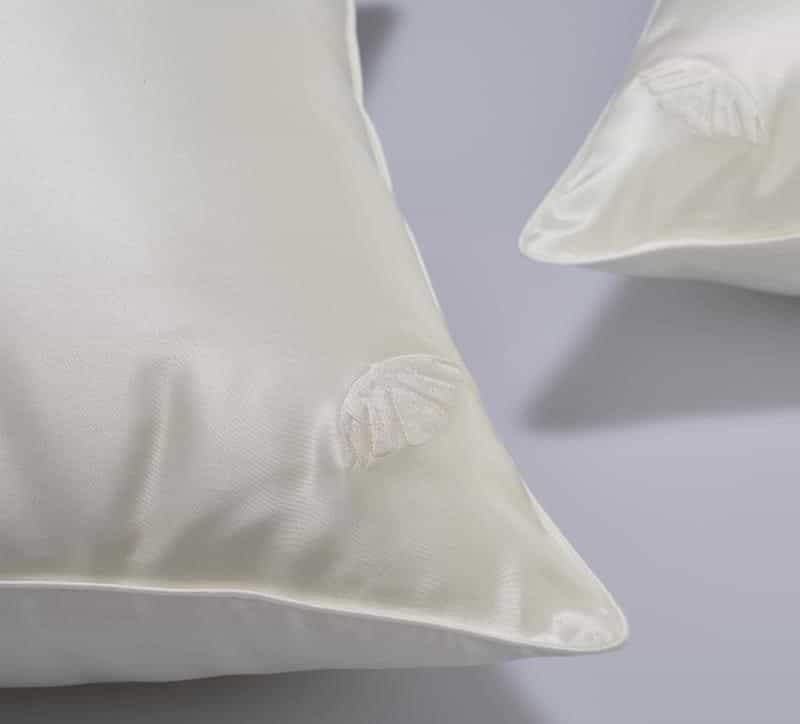
For example, the Silk pillow with silk shell combines Grade 6A double-strand mulberry silk filling with a removable 16 momme charmeuse silk cover. The cover has a zipper closure and is described as machine washable in cold water with gentle detergent; the pillow itself should not be tumble-dried. Its construction illustrates why it is helpful to distinguish the materials in the fill from those in the shell. Before choosing it specifically for travel, compare its size and packed dimensions with your luggage and check that its shape suits the support you want while seated.
Silk is not the only plausible cover choice, and a natural fiber is not automatically the best option for every traveler. Consider the touch, climate, washability, and expected wear. A product’s material description is a starting point for comparison, not a substitute for checking the complete construction and care label.
Size, fit, and the limits of product descriptions
Words such as “portable,” “supportive,” and “lightweight” can mean different things across products. Dimensions offer a more concrete basis for comparison. Check the pillow’s height, width, and depth, and look for packed measurements if available. For a neck pillow, note how the opening and sides sit around the body. For a compact cushion, consider whether its surface area is enough to support the part of the body you intend to rest against it.
Do not assume that a pillow’s listed size corresponds to a standard fit. Your shoulder width, preferred posture, and seat shape all affect how it feels. If the product information does not explain how the pillow is intended to be positioned, seek a clear description of its use and construction before deciding. When information is missing, a low price or attractive fabric cannot answer the practical questions of fit and support.
A practical checklist before buying
A short checklist can make comparisons easier, particularly when several options seem similar. Begin with the basics, then weigh features according to the trip ahead rather than trying to find a single pillow that does everything.
- Use: Is the pillow intended for neck support, general cushioning, or more than one position?
- Shape and dimensions: Will its height and width fit your posture and the space available?
- Support: Does the filling retain enough loft for the kind of seat and journey you expect?
- Cover: What does it feel like, and can it be removed or cleaned?
- Fill construction: Is it a single material or a blend, and how does that affect care and packed size?
- Portability: Can you stow it in your bag, and does it come with a useful way to carry it?
- Maintenance: Are washing, drying, and storage instructions realistic for your routine?
- Product details: Are the materials, measurements, and care guidance specific enough to compare?
Comfort is personal, preparation is practical
No travel pillow can guarantee sleep. Cabin noise, seat design, light, temperature, and individual comfort all shape the experience. A pillow is one part of a larger effort to rest on the move, alongside comfortable clothing, sensible packing, and an awareness of the limitations of sleeping upright. Its value lies in making a difficult position more manageable, not in promising a perfect night.
Choose by matching the pillow to the route and the way you sit. A useful travel pillow supports the areas you want to cushion, feels agreeable against the skin, fits within your luggage, and can be cared for without fuss. Paying attention to filling and cover separately gives a clearer picture of what you are carrying. On a long journey, that small act of comparison can help turn an awkward seat into a place where rest feels a little more within reach.