Bedding • Fabric guide
Naturepedic and Sleep and Beyond Sheets: Comparing Organic Cotton Weaves
A sheet’s character is shaped by more than its fiber. The way cotton threads cross—sateen or percale—changes how fabric feels, breathes, drapes, and behaves after repeated washing. Naturepedic and Sleep and Beyond offer organic cotton bedding with different constructions and specifications, making the most useful comparison a close reading of the weave, certification, fit, and care instructions.
At first touch, the difference can seem simple: sateen is smooth and softly lustrous; percale is crisp and airy. But a sheet set is a small system, not just a swatch of fabric. Its feel depends on the fiber, yarn, weave, finishing, and laundering, while its everyday usefulness depends on details such as mattress depth, elastic construction, set contents, and the size of each piece. Understanding these elements helps shoppers compare Naturepedic sheets and Sleep and Beyond sheets by the qualities that matter in their own bedrooms—not by brand name alone.
Both companies offer options described as organic cotton, but the available product information covers more than one weave and more than one construction. Sleep and Beyond lists organic cotton sateen and organic cotton percale sheet sets. Naturepedic’s broader bedding range includes organic cotton options, including a sateen crib sheet, as well as other fabrics such as linen. Those products are not interchangeable, and specifications for one should not be assumed to apply to another. A careful comparison starts with the exact set, then considers how its weave and practical details align with the sleeper’s habits.
First, distinguish fiber from weave
Cotton identifies the fiber. Sateen and percale describe ways that yarns are interlaced to make fabric. A sheet can be made from organic cotton and still feel quite different from another organic cotton sheet because its weave, yarn quality, weight, and finishing vary. Certification can provide information about production standards, but it does not tell you whether the fabric will feel crisp or silky. For that, the weave is a more useful starting point.
In a basic plain weave, each horizontal filling yarn passes alternately over and under vertical warp yarns. Percale uses this balanced structure, producing a matte surface with a familiar, crisp hand. Sateen uses a weave structure in which yarns pass over several neighboring threads before interlacing again. That arrangement brings more yarn surface to the face of the fabric, giving it a smoother touch and a gentle sheen. These are broad characteristics, not guarantees: thread choices, finishing, and fabric weight can alter the result.
Percale: crispness and airflow
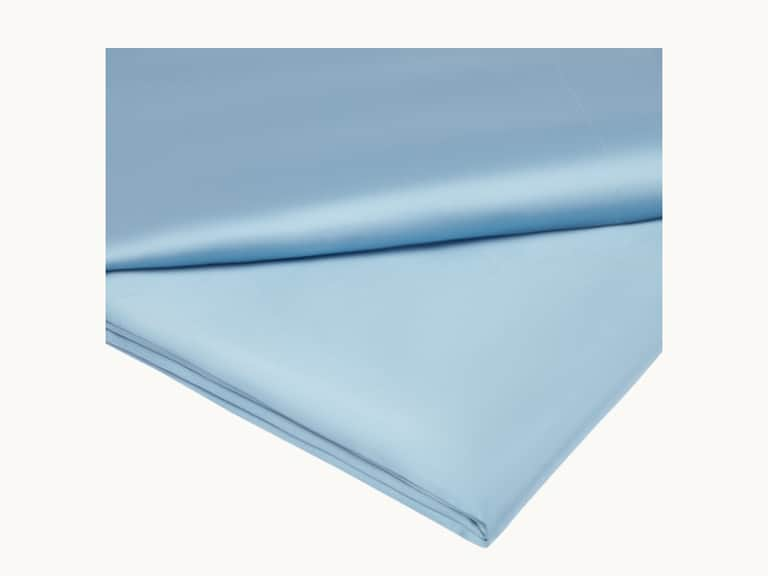
Sleep and Beyond’s organic cotton percale sheet set is described as a lightweight, cool-feeling option with a crisp finish. Its stated construction is 270-thread-count organic cotton. That kind of cool, dry hand often appeals to people who like the feeling of freshly laundered sheets, sleep warm, or live in a warm climate. Percale’s balanced weave can also give the surface a relatively matte appearance, which suits a simple, understated bed.
A crisp sheet is not necessarily stiff. Percale may soften with use and washing, though the rate and degree depend on the cotton yarn, finishing, and care routine. Some sleepers enjoy that evolving softness; others prefer the immediate smoothness of sateen. Percale can crease more visibly than a lustrous weave, especially when it is left in a tumble dryer after drying. For people who value airflow and a fresh, structured feel more than a polished sheen, that trade-off may be worthwhile.
Sleep and Beyond’s listed percale set has practical features that are worth evaluating alongside its weave. The fitted sheet is described as having deep pockets designed to fit mattresses up to 18 inches, with reinforced elastic and double-stitched corners. The manufacturer’s information also identifies the fabric as GOTS-certified organic cotton and describes reusable, biodegradable packaging. These details address different questions: the weave describes feel; the pocket depth addresses fit; and certification and packaging claims concern other aspects of the product.
Sateen: smoothness and drape
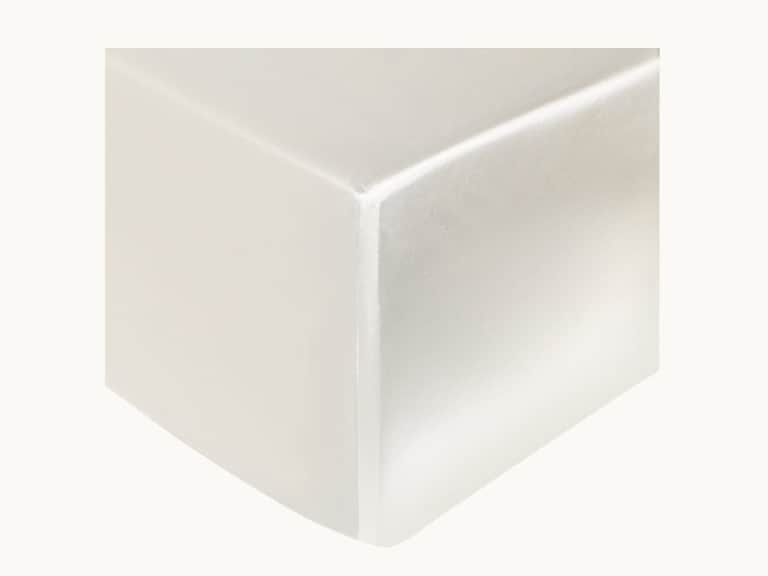
Sateen is often chosen for a smoother, more fluid surface. The exposed yarns create a touch that many people describe as silky, though cotton sateen remains cotton rather than silk. It tends to drape more softly than percale and may have a subtle glow under bedroom light. For sleepers who prefer a close, smooth surface, or who want a neatly tailored look, sateen can be an appealing choice.
Sleep and Beyond’s organic cotton sateen sheet set is listed as a 300-thread-count weave. The product information describes the cotton as GOTS-certified and notes reinforced elastic and double-stitched corners on the fitted sheet. As with percale, the fitted sheet is specified to accommodate mattresses up to 18 inches deep. The listed set includes a flat sheet, a fitted sheet, and pillowcases, with quantities varying by size. Confirm the exact contents for the selected size before ordering, especially for Twin or Split King configurations.
A smoother surface does not automatically mean that sateen will feel too warm, nor does percale guarantee that every sleeper will feel cool. Sleep comfort is personal and also influenced by room temperature, duvet insulation, pajamas, and individual heat and moisture patterns. The weave can tilt the experience: percale is commonly associated with an airier, crisper hand, while sateen often feels more enveloping and smooth. If temperature is a priority, combine those general tendencies with the sheet’s stated construction and your own experience.
How Naturepedic fits into the comparison
Naturepedic’s bedding range includes products with different fibers, purposes, and specifications, so “Naturepedic sheets” is not one uniform fabric category. Its organic sateen crib sheet, for example, is described as 100% GOTS-certified organic cotton with a 300-thread-count sateen weave. It has an all-around elastic perimeter and is designed for a snug fit on a crib mattress. Those features make it a nursery product, not a direct size-for-size substitute for an adult sheet set.
Naturepedic also offers organic cotton products in other constructions, including Supima cotton sheet sets. The described Supima set uses a 300-thread-count, double-ply weave and includes a fitted sheet, flat sheet, and pillowcases in Queen, King, and California King sizes. It is important not to infer a particular sateen or percale feel solely from the cotton variety or thread-count figure. Read the construction details for the exact product: fiber type, weave, and ply each describe different attributes.
The same care is needed when comparing a Naturepedic organic cotton sheet with a Naturepedic linen sheet. Linen is made from flax, not cotton, and its texture, structure, and laundering characteristics differ. A product’s presence in the same brand collection does not make it a like-for-like comparison. To compare organic cotton sheets fairly, place one cotton product beside another and check the exact fiber and weave rather than relying on a brand-wide label.
Certifications: what the label can—and cannot—tell you
A certification is useful only when its scope is understood. The Sleep and Beyond sateen and percale descriptions identify their cotton as GOTS-certified organic. Naturepedic’s organic cotton crib sheet is also described as GOTS-certified. GOTS is a textile-processing standard with requirements that extend across the supply chain, including criteria related to organic fiber and processing. Shoppers who want to verify a claim should look for the certification on the product information or label and consult the certifier’s current public resources for the standard’s scope.
Terms such as “organic,” “natural,” or “non-toxic” do not all mean the same thing, and a product may carry different certifications for different purposes. A fiber certification is not a promise that a sheet will suit every skin type, nor does it identify the fabric’s tactile qualities. Conversely, an attractive hand feel does not establish how the fiber was grown or processed. Separate the questions: What is the material? What is the weave? Which certification applies to this item? What does the certification cover?
It is equally useful to distinguish certification from packaging claims. Sleep and Beyond’s product descriptions mention reusable and biodegradable packaging, while other product details may address dyes, chemicals, or manufacturing practices. These claims are not interchangeable with an organic textile certification. If a particular standard is important to your decision, check the product-specific documentation rather than assuming that every item from a brand carries the same certification or manufacturing attributes.
Thread count is only one part of the story
Thread count measures the number of threads in a specified area of woven fabric, but it is not a simple score of comfort or durability. The yarn’s quality and thickness, the weave, finishing, and construction can matter just as much. The Sleep and Beyond products described here list 270-thread-count percale and 300-thread-count sateen. Those figures offer a point of reference within their product descriptions; they do not prove that one set is automatically softer, cooler, or longer-lasting than the other.
For a fair comparison, ask what the number accompanies. Is the material 100% cotton? Is it a single- or double-ply construction? Is the fabric percale or sateen? How are the seams and elastic finished? Does the product specify a certification? A high number without a clear explanation of construction is less useful than a complete description that lets you evaluate the fabric as a whole.
Fit: measure the mattress, not just the label
A fitted sheet can feel uncomfortable even when its fabric is excellent if it is too shallow, too loose, or made for a different mattress configuration. Measure the mattress from edge to edge, then account for its depth, including a topper or mattress pad that will remain underneath the sheet. Compare the total with the fitted-sheet pocket depth and the product’s size chart. The Sleep and Beyond sateen and percale descriptions state that their fitted sheets fit mattresses up to 18 inches deep; verify the selected size and any exclusions before purchase.
Check the full set contents, too. A Twin set may include one pillowcase, while larger sets may include two. Split King arrangements can require two Twin XL fitted sheets rather than one standard King fitted sheet. Flat-sheet dimensions and pillowcase sizes can differ by configuration. These practical details are easy to overlook in a weave comparison, yet they determine whether the set works with the bed already in the room.
Care and longevity
Care instructions should be treated as part of the fabric specification. The available Sleep and Beyond organic cotton sateen and percale descriptions identify the sets as machine washable. Exact washing temperatures, drying settings, and other instructions should be checked on the product label, because guidance can differ between items. Naturepedic’s organic cotton crib-sheet information also describes machine washing and dryer-friendly care. Follow the instructions for the particular product rather than assuming that all cotton bedding tolerates the same treatment.
In general, using an appropriate wash cycle and avoiding excessive heat can help reduce unnecessary stress on fabric and elastic. Do not overload the washing machine, since sheets need room to circulate. Separate bedding from items with hooks or rough fasteners that could snag the weave, and address stains according to the care label. If a fitted sheet comes out tightly twisted, a little care when removing it from the dryer can help limit creasing and make folding easier.
Organic certification alone does not determine lifespan. Durability depends on fiber and yarn quality, weave density, construction, washing frequency, drying conditions, and how well the sheet fits the mattress. A fitted sheet under constant strain may wear differently from one with a suitable pocket depth and secure elastic. Reinforced corners and stitching can be useful construction features, but they do not replace sensible care.
Which weave suits which sleeper?
Choose percale if you are drawn to a crisp, matte surface and an airy feel. It may be a natural starting point for people who tend to sleep warm or who like the sensation of fresh, structured cotton. Consider that its crispness may take time to soften and that a matte fabric can wrinkle more visibly.
Choose sateen if you prefer a smooth hand, a softer drape, and a subtle sheen. It can suit people who enjoy a more polished, fluid surface against the skin. Its feel is distinct from percale, but that does not make it universally better or worse. If possible, touch fabric samples or compare sheets you already own before deciding; words such as “cool,” “silky,” and “soft” are helpful cues, not universal measurements.
For a nursery, prioritize the exact crib dimensions, a secure fitted construction, and the product’s care and certification details. Naturepedic’s organic sateen crib sheet is described with an all-around elastic perimeter and dimensions for a standard crib sheet, with separate dimensions listed for oval-sheet versions. Check the mattress type carefully: a standard crib sheet and an oval sheet are not interchangeable simply because both are intended for a nursery.
A practical comparison checklist
Before choosing between Naturepedic and Sleep and Beyond sheets, use the product page and label to answer these questions:
- What is the fiber? Confirm that the specific item is 100% cotton if that is your requirement; do not generalize from a brand’s broader bedding range.
- Which weave is stated? Look for sateen or percale, rather than inferring the weave from thread count or a “silky” description.
- What certification applies? Verify the product-specific organic certification and understand what the stated standard covers.
- Will it fit? Compare mattress dimensions and total depth—including any topper—with the fitted sheet’s size and pocket specifications.
- What is included? Confirm flat-sheet, fitted-sheet, and pillowcase quantities for the exact size, especially Twin and Split King.
- How should it be washed? Follow the item’s label for temperature, cycle, and drying method; check whether instructions vary by component.
- What feel do you prefer? Use weave as a guide, then weigh your own preference for crispness, smoothness, drape, and sheen.
The quieter measure of a good sheet
A good sheet rarely announces its presence. It fits without slipping, feels comfortable through changing temperatures, and survives routine washing without becoming a source of irritation. Naturepedic and Sleep and Beyond both offer options that can appeal to shoppers seeking organic cotton bedding, but the best choice depends on the particular product and the sleeper’s priorities. Sleep and Beyond’s listed organic cotton sateen and percale sets make the weave contrast especially clear: one leans smooth and draped, the other crisp and airy. Naturepedic’s offerings require the same item-by-item reading, particularly when comparing adult sheets with crib bedding or distinguishing cotton from linen.
The most reliable decision is not a contest of labels. It is a match between fabric and use: a weave you enjoy, a certification you can verify, dimensions that suit your mattress, and care instructions you are willing to follow. Once those details are aligned, the choice between sateen and percale becomes less abstract. It becomes a matter of what you want the bed to feel like when the room grows warm, the morning light reaches the sheets, and the day begins.